

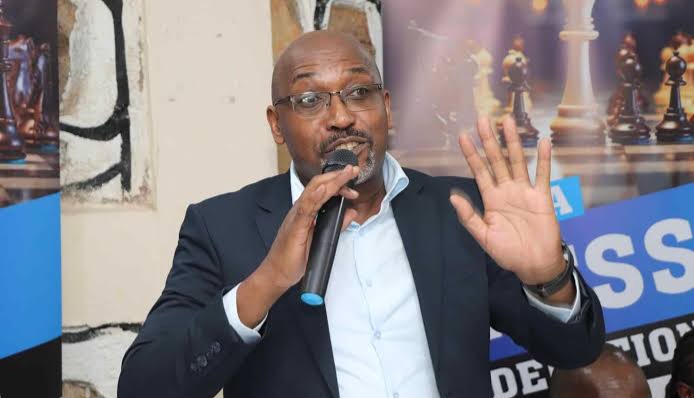
Andrew Bakiza has made an assertive opening move as the new president of the Uganda Chess Federation, signaling a leadership style rooted more in boardroom discipline than sporting politics.
The 50-year-old engineer was officially sworn in on Friday, December 19, 2025, at Kati Kati Restaurant, alongside his executive committee. His message was clear and deliberate, delivered like a calculated chess gambit: strong management, strong funding, strong players.
Bakiza brings to the federation a résumé that reads like a corporate prospectus. He has worked with leading telecom companies including MTN Uganda, Airtel, Liquid Telecom and Zain, contributed to government digitisation under a World Bank project, and chaired the Ease of Doing Business Committee under the Presidential CEO’s Forum for eight years.
Now, he says, it is time to apply the same corporate discipline to chess, a sport he believes has suffered from weak systems rather than lack of talent.

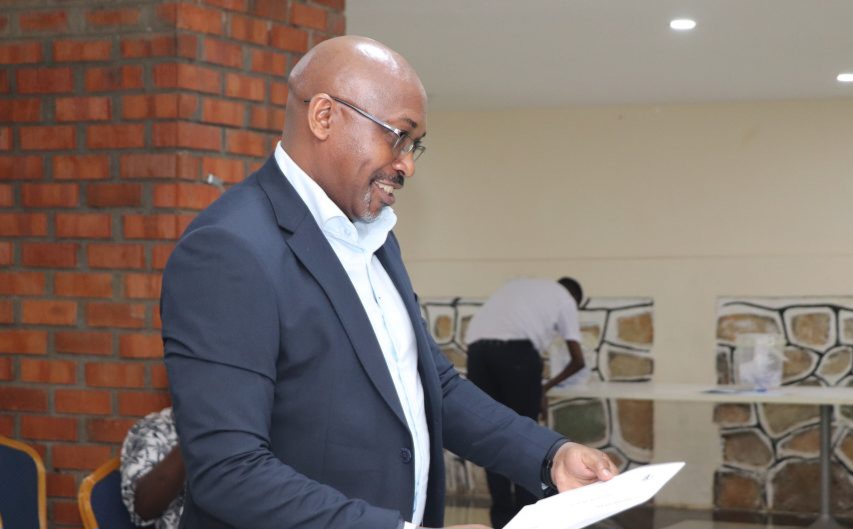
“At its core, chess is an intellectual sport,” Bakiza said. “I have been in rooms where players were architects, lawyers and engineers, many with master’s degrees. These are people with serious potential who just need structure, welfare and opportunity.”
Bakiza takes office at a delicate moment for the federation, which has experienced internal friction and is still working toward full certification by the National Council of Sports (NCS). His leadership approach, however, is measured and procedural.
“I believe in reconciliation, but guided by rules,” he said. “As president, I represent everyone. No grudges. Strong management means transparency, discipline and accountability for all.”
One of his immediate priorities is upgrading chess from a Tier 4 to a Tier 3 federation under the new Sports Act, a change that would unlock improved government funding. The challenge, he admits, lies in grassroots development.
To address this, Bakiza plans to decentralise chess administration by strengthening regional associations in Western, Northern, Eastern and Central Uganda. While these structures already exist, he says they lack capacity and resources.
His plan includes equipping regions with boards and clocks, funding them proportionally, and demanding clear district-level development plans backed by proper reporting.
“Chess has been too centralised,” Bakiza noted. “Yet talent is everywhere, including in the informal sector. We must reach the last mile.”
Schools are a central pillar of his expansion strategy. Bakiza is engaging corporate partners to sponsor school chess programmes and has confirmed discussions with banks including Centenary and Citibank. He believes better governance will naturally attract private-sector support.
On the competitive front, Bakiza is raising the bar for players. He has pledged to increase international prize money fivefold and has floated the idea of awarding a car annually to the country’s best-performing player.
He also wants to modernise how the sport is consumed. By introducing digital boards connected to the internet, Bakiza believes chess tournaments can become spectator-friendly events, comparable to football. His long-term vision includes deploying up to 1,000 digital boards across the country.
Perhaps his boldest promise is infrastructure. Bakiza says that by July next year, Ugandan chess will have a permanent home, moving away from reliance on hired hotel venues.
Bakiza won the presidency in a three-way contest by 14 votes, succeeding Mwaka Emmanuel.